
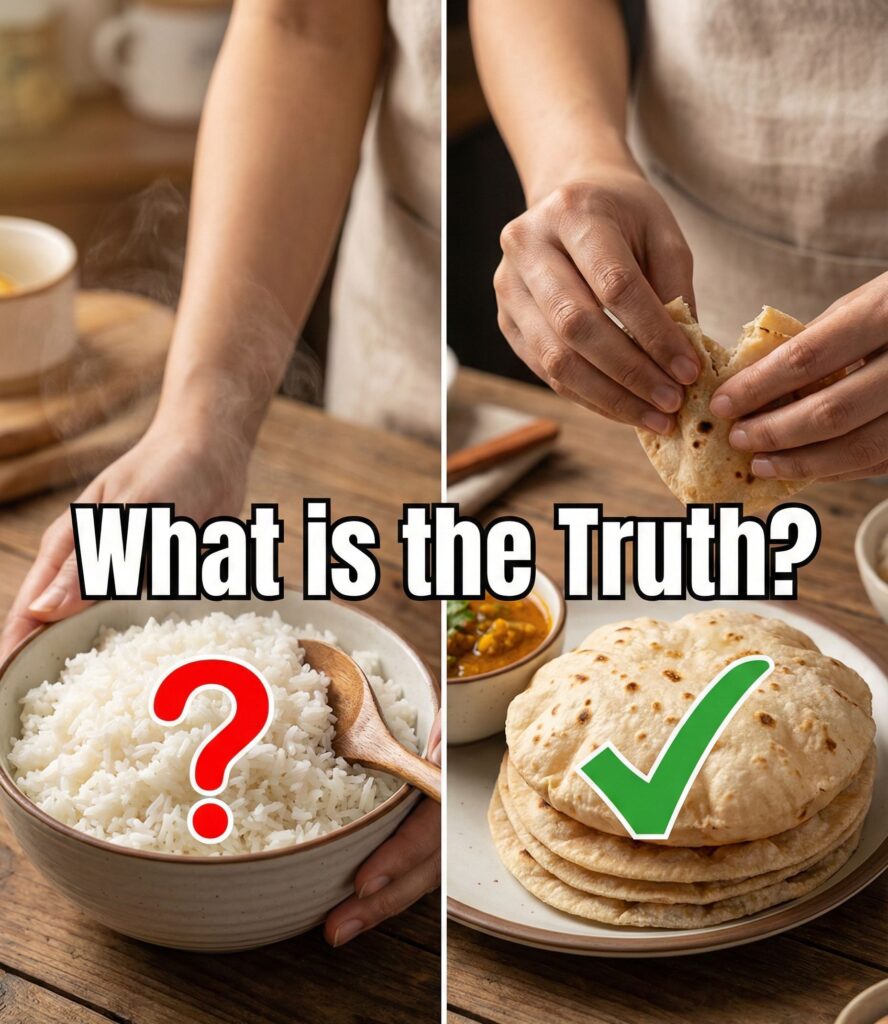
Roti vs. Rice: The Final Verdict – Which One is Secretly Keeping You Fat? (Backed by Science)
Read Time: 15 Minutes | Category: Weight Loss / Nutrition
Let’s be honest for a second. You’ve probably sat at the dinner table, looked at a steaming plate of Jeera Rice or a soft, hot Roti, and felt a pang of guilt.
You’ve heard the gym bros say, “Rice is just sugar!” You’ve heard your grandmother say, “Roti gives you strength!” And then there’s that one friend who quit both and lost 5kgs in a week (but looks miserable).
So, who is lying to you?
If you are an Indian trying to lose weight, the “Roti vs. Rice” war is the biggest confusion in your life. But today, we are ending this debate once and for all. No “bro-science,” no guesswork. Just pure facts backed by the National Institutes of Health (NIH) and nutritional data.
Spoiler Alert: The villain on your plate might not be what you think it is. And the solution isn’t starving it’s knowing your numbers.
The Nutritional Showdown: What’s Inside?
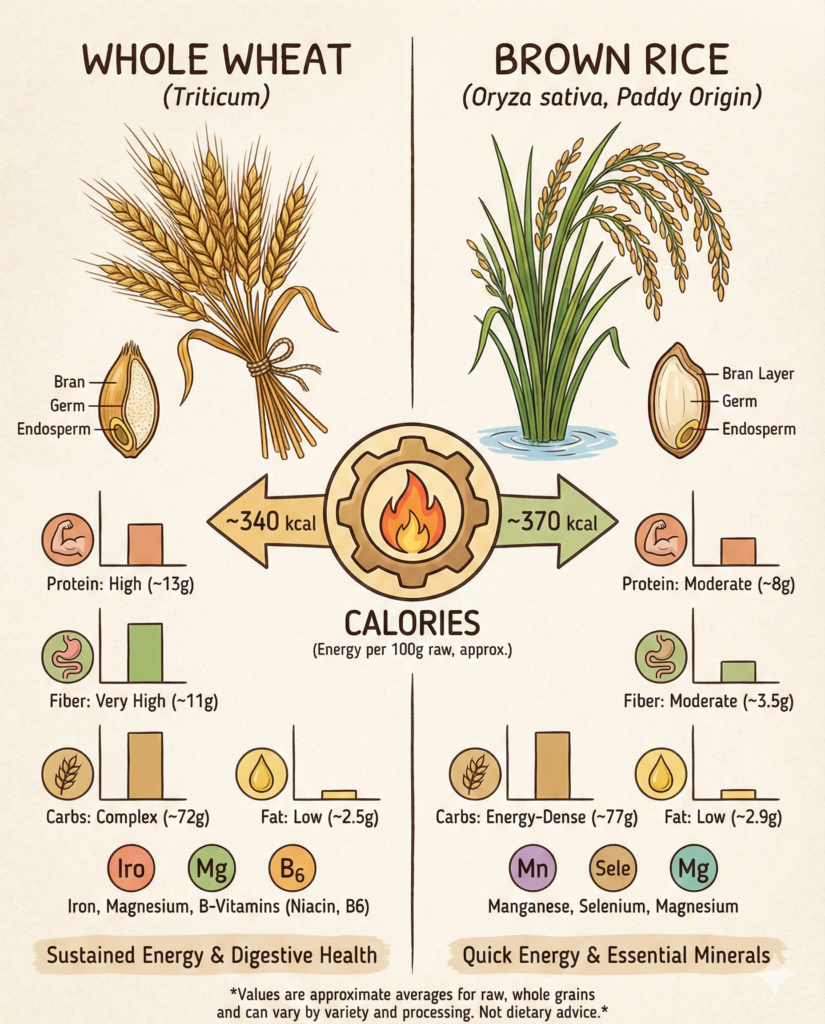
Before we decide which one burns fat, let’s look at what you are actually putting into your body. Most people think Rice is “lighter” and Roti is “heavy,” but the chemical breakdown tells a different story.
Here is the comparison for a standard serving size (approx. 100g cooked):
| Feature | Wheat Roti (1 Medium – 40g raw) | White Rice (1 Bowl – 100g cooked) |
| Calories | ~120 kcal | ~130 kcal |
| Carbohydrates | 22g | 28g |
| Protein | 3.5g | 2.5g |
| Fiber | 2.8g (High) | 0.4g (Very Low) |
| Fat | 1g | 0.3g |
The Immediate Takeaway:
On the surface, they look similar in calories. But look closer at the Fiber and Protein. Roti has significantly more dietary fiber than polished white rice.
Why does this matter? Fiber is the brake in your digestive system. It slows down how fast sugar enters your blood. Rice, having almost zero fiber (if polished), is like a race car with no brakes it spikes your energy instantly, and then crashes it, making you hungry again in an hour.
The Ancestral Paradox: Why Your Grandfather Ate Rice But Wasn’t Fat
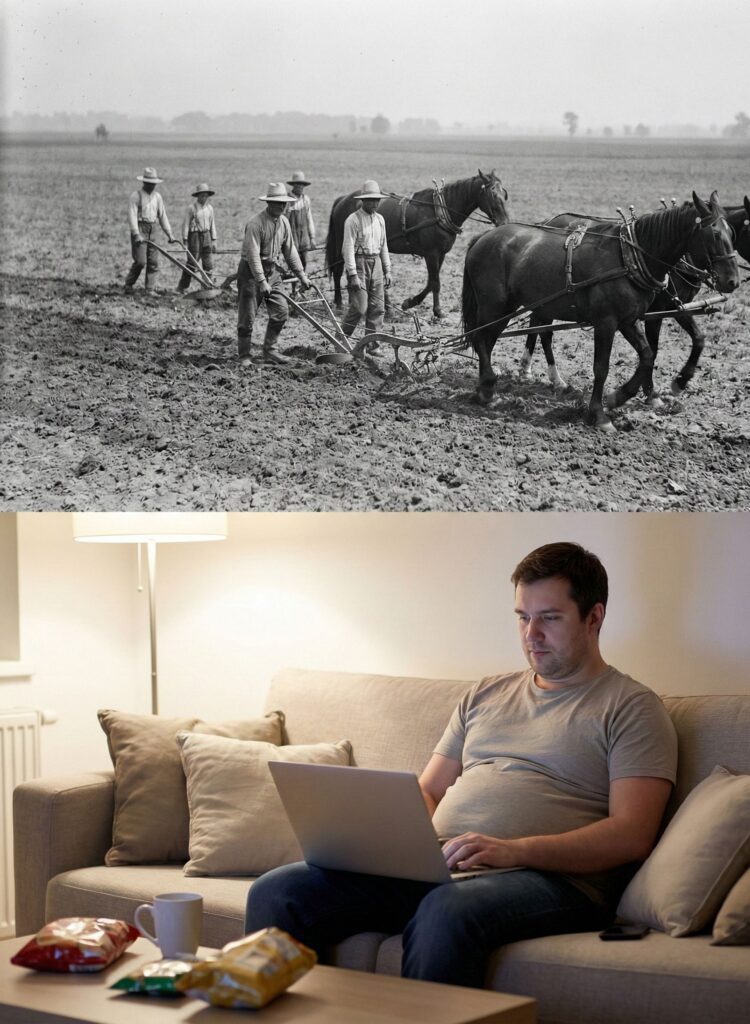
One of the most common arguments in Indian households is, “Beta, hamare zamane mein toh hum khoob chawal aur ghee khate the, humein toh diabetes nahi hua.” (In our times, we ate plenty of rice and ghee, yet we never had diabetes).
This creates a massive confusion for the modern generation. If Rice was fine in 1970, why is it toxic in 2025?
The answer lies in NEAT (Non-Exercise Activity Thermogenesis).
1. The Activity Gap: Our ancestors didn’t have Swiggy, Uber, or Elevators.
- 1970 Lifestyle: Walking to the market, hand washing clothes, grinding spices manually, cycling to work. Average Daily Steps: 15,000+.
- 2025 Lifestyle: Ordering groceries online, washing machines, sitting in traffic, sitting in office. Average Daily Steps: < 3,000.
When you walk 15,000 steps, your body uses the glucose from Rice immediately as fuel. When you sit for 8 hours, that same glucose stays in the blood, spikes insulin, and eventually stores as fat.
2. The Quality of Grain: The rice your grandfather ate was likely Hand-Pounded (Dheki-Kuta) or semi-polished. It retained the bran and germ. Today, the “Premium Basmati” sold in supermarkets is hyper-polished, stripped of all fiber, effectively turning it into pure starch.
Key Takeaway: You cannot eat like your grandfather unless you work like your grandfather. Since you can’t change your modern job, you must change your portion sizes.
👉 Check your modern calorie requirement here with our TDEE Calculator
The Glycemic Index (GI) Trap: The Silent Fat Creator
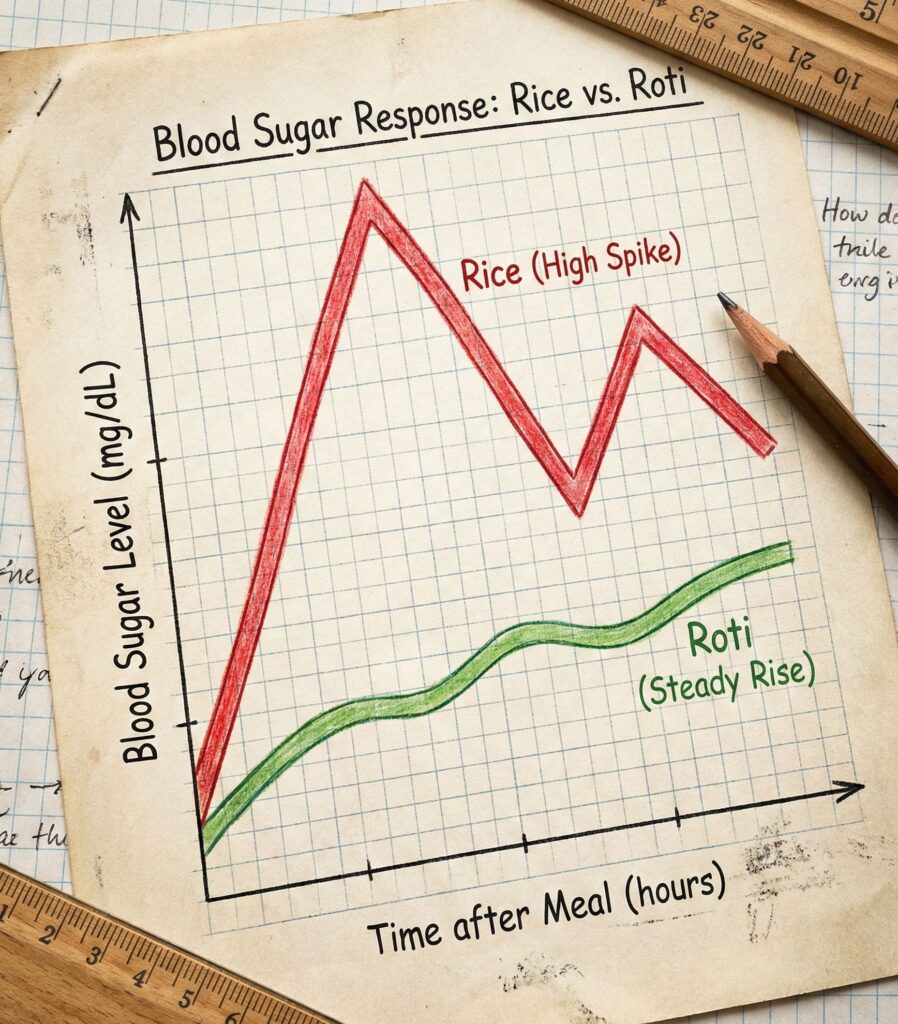
This is where the magic (or the damage) happens. The Glycemic Index (GI) measures how quickly a food raises your blood sugar.
- White Rice GI: ~73 (High)
- Wheat Roti GI: ~62 (Medium)
According to a study published in the NIH (National Library of Medicine) regarding high-glycemic diets, foods with a high GI cause a rapid spike in insulin. Insulin is a fat-storage hormone. When insulin is high, your body stops burning fat and starts storing it.
The Rice Coma Effect: Ever felt sleepy after a heavy lunch of Rajma Chawal? That’s the insulin spike and subsequent crash. Roti, being a complex carb (thanks to fiber), releases energy slowly, keeping you active and full for longer.
The Biology of Fat Storage: Understanding the “Insulin Switch”
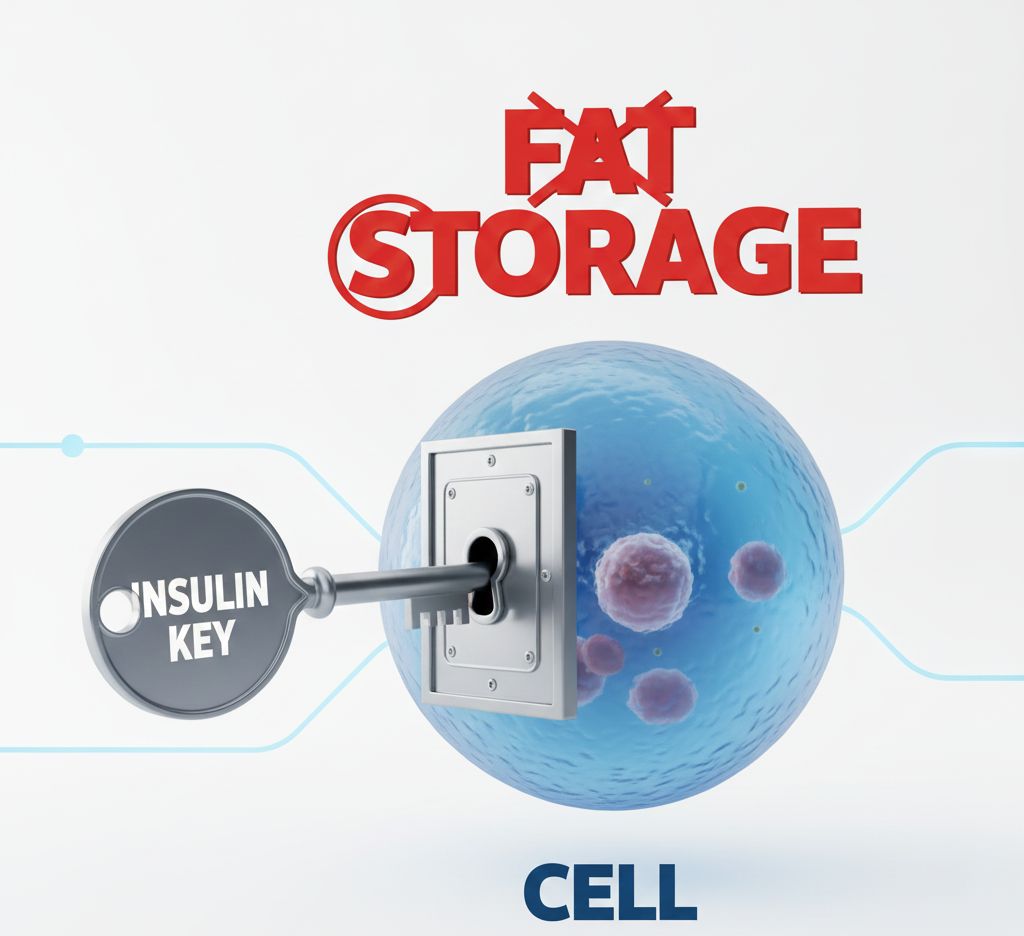
To truly master weight loss, you must understand the hormone that controls it: Insulin.
Think of Insulin as a “Storage Key.” When you eat carbohydrates (Roti or Rice), your body breaks them down into sugar (glucose). Your pancreas releases insulin to unlock your cells so they can absorb this energy.
The Problem: Insulin Resistance According to the Madras Diabetes Research Foundation, Asian Indians have a unique phenotype known as the “Asian Indian Phenotype” or “Thin-Fat Indian.”
- We have higher body fat percentages even at lower BMIs.
- We are genetically more prone to Insulin Resistance.
What happens when you eat too much Roti/Rice?
- You eat a large portion of carbs.
- Blood sugar skyrockets.
- Pancreas floods the body with Insulin.
- Because of “Resistance,” your cells don’t open easily.
- The body thinks, “Oh, I need more Insulin!” and pumps even more.
- High Insulin = Fat Burning STOPPED.
As long as insulin is high in your blood, it is physically impossible for your body to burn stored fat. This is why “snacking” on biscuits or tea with sugar between meals is dangerous it keeps insulin permanently high.
The Fix: You need “Gaps” between meals to let insulin drop. This is why Intermittent Fasting works well with Indian diets.
The Hidden Variable: Your TDEE (Total Daily Energy Expenditure)
Here is the hard truth that 99% of dieticians forget to tell you: Neither Roti nor Rice makes you fat. OVEREATING them makes you fat.
You can lose weight eating only rice, and you can gain weight eating only oats. It’s all about the math.
Your body has a specific calorie budget, known as TDEE (Total Daily Energy Expenditure).
- If your TDEE is 2000 calories, and you eat 2500 calories of Healthy Roti, you WILL gain weight.
- If you eat 1800 calories of Bad White Rice, you WILL lose weight.
But how do you know your number? Most people are shooting in the dark. Stop guessing.
👉 CLICK HERE to Calculate Your Exact TDEE for Free (Discover exactly how many Rotis or bowls of Rice you can eat today to drop 1 KG this week.)
Regional Wars: North Indian Roti vs. South/East Indian Rice
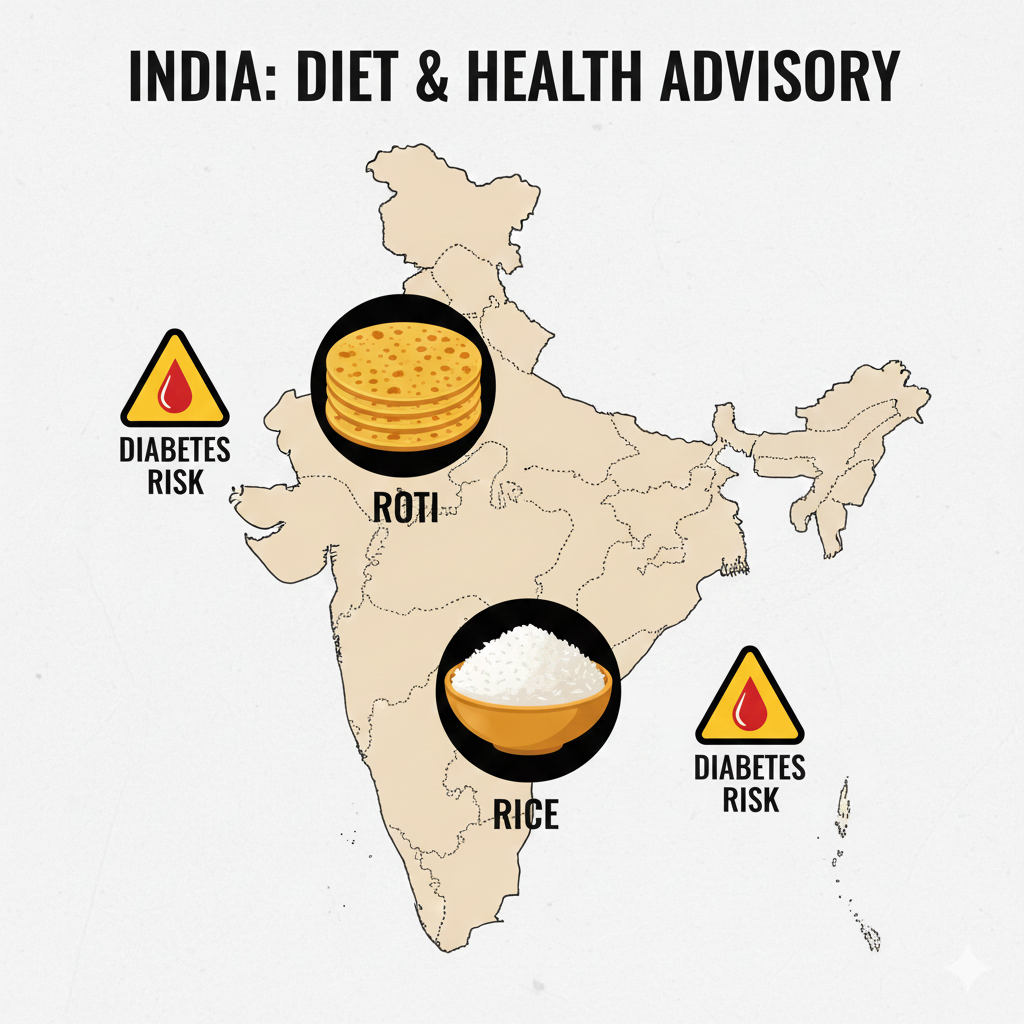
Is one region healthier than the other? Let’s analyze the data based on typical consumption patterns.
The North Indian Trap (Roti Belts – Punjab, Haryana, UP)
While Roti is healthier on paper, the North Indian diet often fails due to Hidden Calories.
- The Issue: Rotis are rarely eaten dry. They are glazed with Ghee/Butter. They are paired with rich gravies (Cream/Malai based).
- The Paratha Problem: A stuffed Aloo Paratha is not just wheat; it’s a calorie bomb of oil + potato + flour, easily exceeding 400 calories per piece.
Comparison Verdict: Statistics show that type 2 diabetes is prevalent in BOTH regions. This proves that the grain isn’t the issue the quantity and the lifestyle are. Whether you speak Hindi or Tamil, the language of Calories remains the same.
It’s Not the Rice, It’s the Gravy! (The Hidden Villain)
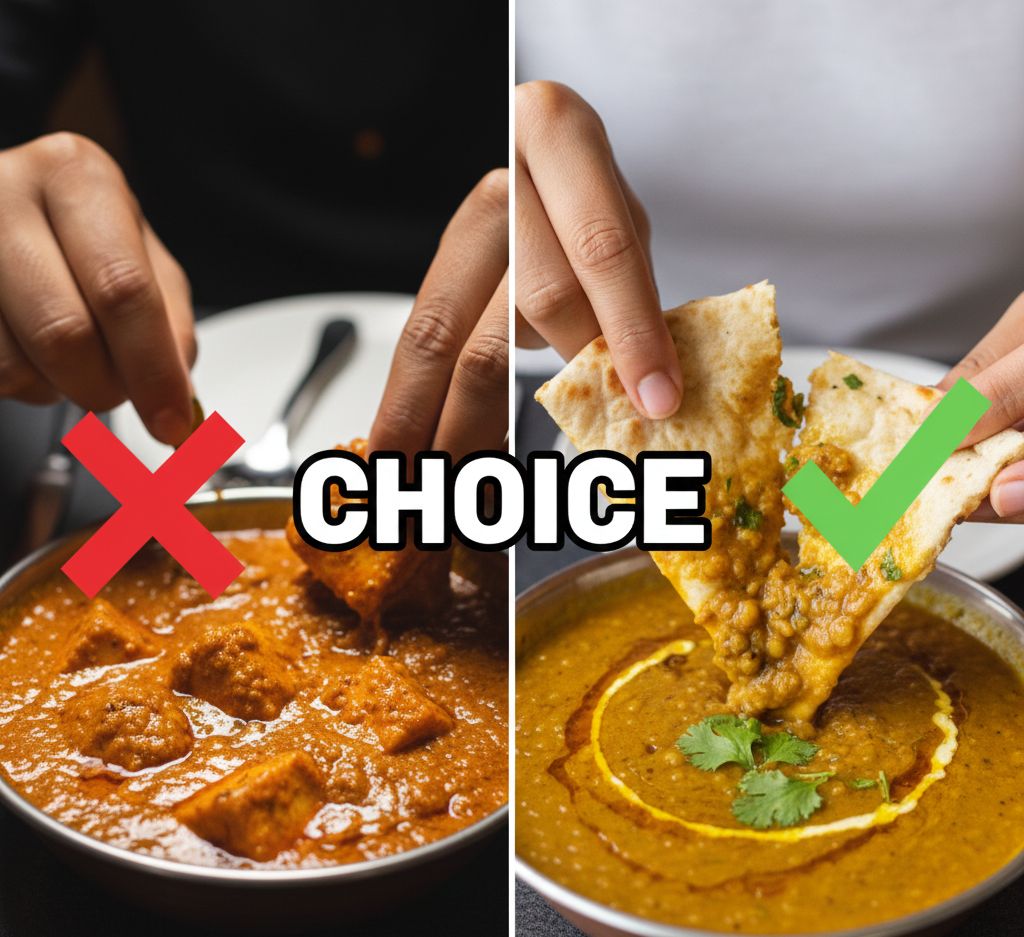
We blame the rice, but we ignore what we pour on the rice.
Let’s do a calorie breakdown of a standard Indian Lunch:
- Scenario A: 150g Rice (200 cal) + 1 Bowl Dal Fry (150 cal) = 350 Calories. (Safe)
- Scenario B: 150g Rice (200 cal) + 1 Bowl Butter Chicken/Paneer Butter Masala (450 cal) = 650 Calories. (Danger)
The heavy cream, cashews (kaju paste), and oil floating on top of your curry are far more dangerous than the plain rice. Fat has 9 calories per gram, while Rice (Carbs) has only 4 calories per gram.
Pro Tip: If you want to eat Rice and lose weight, switch your side dish.
- Avoid: Creamy gravies, Malai Kofta, oily pickles.
- Choose: Tandoori items, Dry Sabzi, Dal Tadka (with less oil), Roasted Chicken/Paneer.
The “Gluten” Myth: Is Wheat Making You Bloated?
In recent years, “Gluten-Free” has become a fashion trend in India. Western influencers have convinced many that wheat (Roti) is inflammatory.
Let’s look at the science. NIH research indicates that unless you have Celiac Disease or Non-Celiac Gluten Sensitivity (which affects less than 1-2% of the Indian population), gluten is not harmful to your weight loss goals.
Click Here to Use Our Free Health Risk Calculator and Prevent Before it’s too late.
However, many people feel lighter after quitting Roti. Why? Because when you stop eating Roti, you usually stop eating heavy curries, ghee, and processed flour products. You reduced calories, you didn’t just remove gluten.
Scientific Strategy: How to Eat Rice & Still Lose Weight
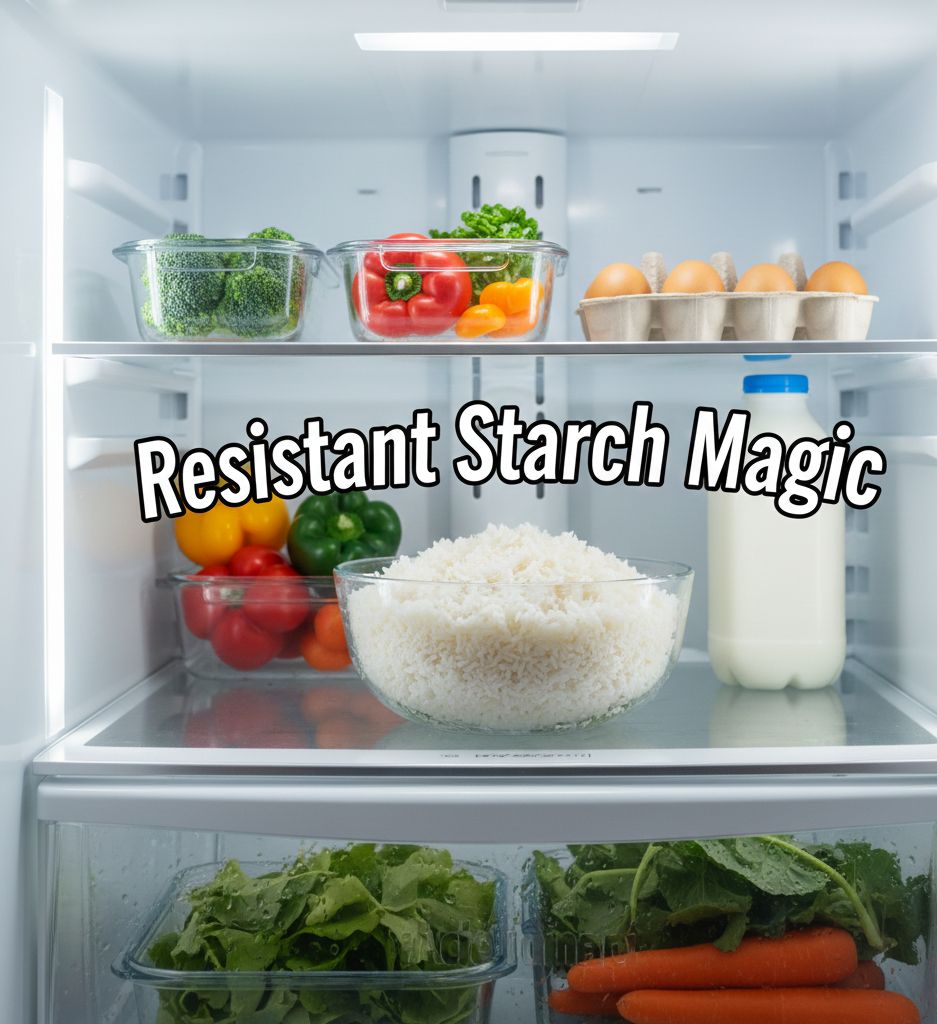
If you are a Rice lover and can’t imagine life without it, you don’t have to quit. You just need to hack the chemistry of your meal.
The Blunting Effect: Research shows that you can lower the Glycemic Index of a meal by adding fiber and fat.
- Never eat plain Rice. Always add a tsp of Ghee (healthy fat slows absorption).
- The 50% Rule: Your plate should be 50% vegetables/salad, 25% Protein (Dal/Chicken/Paneer), and only 25% Rice.
- Cool Your Rice: This sounds crazy, but it’s backed by science. If you cook rice, let it cool, and reheat it, it develops Resistant Starch. This starch acts like fiber and reduces the calorie absorption by up to 10-15%.
The Verdict: Roti vs Rice – Who Wins?
Let’s break it down by profile:
Winner: ROTI (For General Weight Loss)
If you have a desk job, struggle with cravings, or have Diabetes/PCOS, Roti is the superior choice.
- Why? Higher protein, higher fiber, keeps you full longer. You naturally eat less because chewing takes effort.
Runner Up: RICE (For Post-Workout & Digestion)
If you have digestive issues (bloating/gas) or you are a gym-goer who lifts heavy weights, Rice is your friend.
- Why? Easy to digest, provides instant glycogen refill for muscles.
The Traffic Light Diet Plan (Sample Menu)
Confused about how to structure your day? Here is a sample plan that incorporates both, keeping you within a deficit.
(Note: This is a generic plan. For a plan tailored to your body type, use the Calculator below)
Breakfast (High Protein, Low Carb)
- Moong Dal Chilla or 2 Boiled Eggs + 1 Toast.
- Why? Keep insulin low in the morning to burn fat.
Lunch (Complex Carbs – Roti)
- 2 Multigrain Rotis + 1 Bowl Sabzi + 1 Bowl Dal + Cucumber Salad.
- Why? Fiber keeps you full during the workday.
Pre-Workout Snack
- Black Coffee + 1 Banana.
Dinner (Light Carbs – Rice)
- 1 Small Bowl Rice + Soya Chunks/Chicken Curry + Ghee.
- Why? Rice is easy to digest at night, improving sleep quality compared to heavy wheat.
The Psychology of Cravings: Why You Can’t Stop Eating
Have you ever finished a meal of salad and grilled chicken, but felt… unsatisfied? Your stomach is full, but your heart says, “Kuch kami hai” (Something is missing).
This is Palate Fatigue and Carb Dependence. Indian brains are wired to recognize “satisfaction” only when Serotonin is released. Carbohydrates (Roti/Rice) trigger Serotonin. Protein and Salad do not trigger it as strongly.
How to beat this addiction?
- The 21-Day Rule: It takes 21 days to reset your palate.
- Volume Eating: If you crave the feeling of eating rice, replace 50% of your rice with Cauliflower Rice (Gobi grated like rice). You get the volume, but 90% fewer calories.
- Hydration: Often, thirst is masked as carb cravings. Drink a glass of water 15 mins before your meal.
Conclusion: Stop Failing, Start Calculating
The “Roti vs. Rice” debate is a distraction. The real enemy is Unawareness.
You are not fat because of rice. You are not fat because of wheat. You are struggling because you haven’t balanced your “Calories In vs. Calories Out.”
The food you love can be part of your diet. You just need to know the limit. Stop restricting, start calculating.
Don’t let another week go by without results.
CLICK HERE: Calculate Your TDEE Here and Get Your Strategy
(It takes 30 seconds, and it’s completely free. Find out if you are eating too much Roti or too much Rice.)
Timeline Heading 1
This is timeline description. Please click here to change this description.
Timeline Heading 2
This is timeline description. Please click here to change this description.
Timeline Heading 3
This is timeline description. Please click here to change this description.
Timeline Heading 4
This is timeline description. Please click here to change this description.
Timeline Heading 5
This is timeline description. Please click here to change this description.