

The Confusion That Costs You Money
If you’ve spent any time serious about strength, performance, or muscle gain, you’ve heard the name: Creatine. It is the single most studied, proven, and effective supplement in the world of sports nutrition a literal cheat code for your muscles.
But walk into any supplement store in India, and confusion hits immediately. You’re not just choosing Creatine; you’re choosing between Creatine Monohydrate, Creatine Hydrochloride (HCL), buffered Kre-Alkalyn, Ethyl Ester, and a dozen other “advanced” forms. Each comes with a higher price tag and a shiny promise: better absorption, no bloating, and no loading phase.
The question is, are these claims science or just brilliant marketing?
This guide is designed to be the final word on Creatine. We are stripping away the industry hype and analyzing these forms using only the most rigorous, peer-reviewed data available on PubMed and the National Institutes of Health (NIH). By the end of this read, you will not only know which Creatine to buy but why saving you money and maximizing your gains.
This is your ultimate scientific blueprint for using Creatine optimally. Let’s separate the facts from the labels.
Macronutrients explained protein fats and carbs in detail
1. The Creatine Foundation: What It Is and Why You Need It
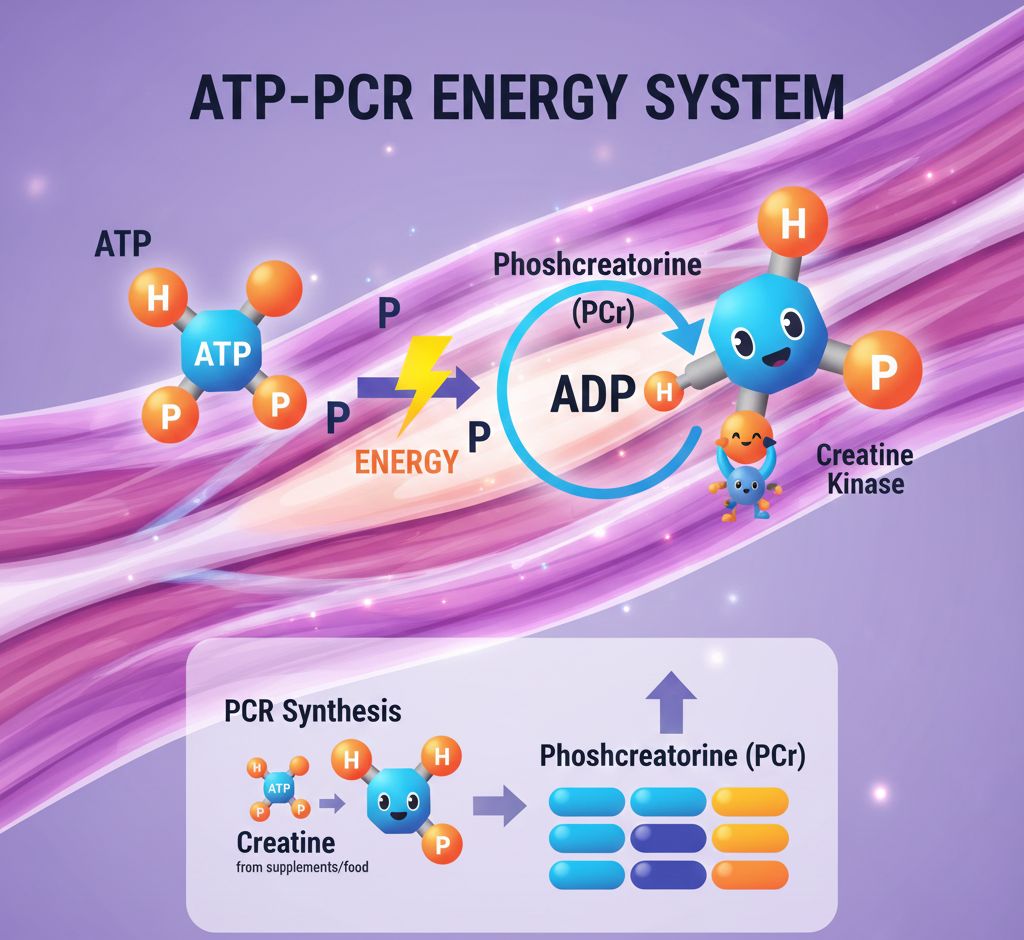
Before we dive into the battle of the powders, we must understand the fundamental science of Creatine. This is crucial for distinguishing effective claims from false ones.
1.1. Creatine: The Emergency Fuel Tank for Your Muscles
Creatine is a compound naturally produced in your body (primarily in the liver, kidneys, and pancreas) from three amino acids: arginine, glycine, and methionine. Approximately 95% of your body’s Creatine is stored in your skeletal muscles.
The Science (The ATP System): Our muscles use ATP (Adenosine Triphosphate) for immediate, explosive energy (like during a heavy squat or a sprint). When ATP is used, it loses a phosphate molecule and becomes ADP (Adenosine Diphosphate). To instantly regenerate this spent fuel back into usable ATP, your body relies on Phosphocreatine (PCr). Creatine supplementation increases the reservoir of PCr in your muscles.
- Result: By increasing PCr stores, you can perform an extra 1-2 repetitions during a set, lift 5-15% heavier weights, and sustain high-intensity exercise for a few crucial seconds longer. This sustained increase in work capacity is what ultimately drives muscle growth and strength adaptation.
1.2. Why Diet Alone Is Not Enough (The Indian Context)
While Creatine is naturally found in red meat and fish, achieving optimal muscle saturation through diet alone is incredibly difficult, especially for vegetarians or those limiting red meat consumption (common in Indian diets).
- To get the minimum effective dose of 5 grams of Creatine, you would need to consume approximately 2.2 pounds of raw Chicken daily an impractical and expensive task.
- Supplementation is the most cost-effective and efficient way to raise muscle Creatine levels by 20–40%, leading to noticeable performance benefits.
2. The Undisputed King: Creatine Monohydrate (NIH Proven)
Creatine Monohydrate (CM) is the industry standard. Its position at the top is not based on hype or history, but on a mountain of scientific evidence that spans four decades and thousands of human trials.
2.1. The Gold Standard: Safety and Efficacy
The scientific community, including bodies like the International Society of Sports Nutrition (ISSN) and repeated studies indexed on PubMed and NIH, officially recognize Creatine Monohydrate as the most effective ergogenic nutritional supplement currently available to athletes in terms of increasing high-intensity exercise capacity and lean body mass.
- Efficacy: Monohydrate is proven to increase muscle Creatine stores by the maximum amount possible. No other form has proven to achieve a higher saturation level.
- Safety: CM has an exceptionally clean long-term safety record across all populations, with decades of clinical data refuting common myths about kidney or liver damage at recommended dosages.
2.2. The ‘Bloating’ Myth and Absorption
The primary critique against Monohydrate is often bloating or poor absorption. The science tells a different story:
- Absorption: CM absorption is near-total. Approximately 99% of ingested Creatine Monohydrate is taken up by the muscles or excreted, showing minimal waste.
- Bloating: Any initial water retention is intracellular (inside the muscle cell), which is exactly what Creatine is supposed to do, pulling water into the muscle for performance. This is functional, desirable retention, not the subcutaneous ‘bloat’ associated with unhealthy diets. Any initial, non-functional digestive distress is typically linked to poor quality, cheap powders that haven’t been adequately micronized.
Top 7 supplements every Indian should take
3. Creatine HCL and Kre-Alkalyn: Science vs. Marketing Hype
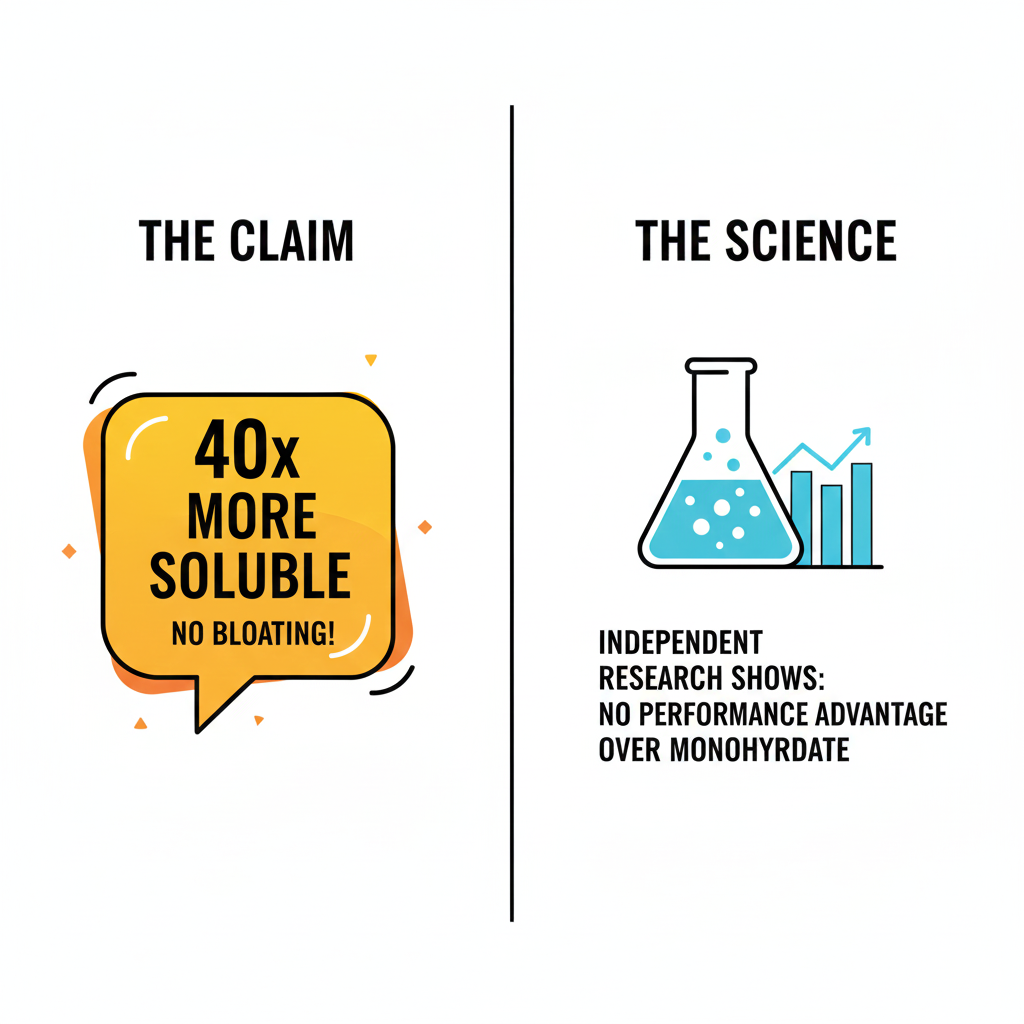
While Creatine Monohydrate (CM) is inexpensive and proven, the supplement market constantly introduces new, more expensive forms claiming superior benefits. These forms primarily address two non-issues: poor solubility and perceived side effects like bloating. Let’s look at the scientific evidence behind these ‘next-generation’ Creatines.
3.1. Creatine HCL (Hydrochloride): The Solubility Claim
Creatine HCL is marketed as having superior solubility in water compared to Monohydrate, leading to the promise of better absorption and smaller effective doses.
- The Claim: HCL is 40 times more soluble than CM, meaning less is needed, and there is no bloating.
- The Reality (Science-Backed): While it is true that Creatine HCL is highly soluble in water, the scientific relevance of this solubility advantage is negligible once it reaches the stomach.
- Absorption Rate: (NIH/PubMed finding focus) Research has overwhelmingly failed to demonstrate that HCL is absorbed more efficiently or results in higher plasma (blood) Creatine levels than Monohydrate. Crucially, studies have shown that muscles become fully saturated with CM, meaning any “superior” absorption from HCL offers no biological advantage.
- Dosage: The core marketing point—that you need less HCL—lacks any substantial clinical backing. Most studies recommending CM use a standard 3-5g dose, and the evidence does not support using a dramatically lower dose of HCL to achieve the same performance gains.
3.2. Kre-Alkalyn (Buffered Creatine): The pH Stability Myth
Kre-Alkalyn is a ‘pH-buffered’ form of Creatine, meaning it is processed at a higher pH level (less acidic) than Monohydrate.
- The Claim: Standard Creatine Monohydrate degrades into the inactive byproduct Creatinine in the acidic environment of the stomach before it can reach the muscles. Kre-Alkalyn’s higher pH prevents this degradation, leading to better utilization and no side effects.
- The Reality (The pH Myth Debunked): This claim fundamentally misunderstands human physiology.
- Stomach Transit Time: (Scientific Consensus) The transition of Creatine through the highly acidic environment of the stomach is incredibly fast (typically minutes). Scientific studies have proven that the amount of CM that degrades into Creatinine during this short transit time is insignificant and negligible.
- Efficacy: Controlled studies comparing Kre-Alkalyn to Creatine Monohydrate have consistently found no significant difference in their ability to improve muscle performance, body composition, or maximal muscle Creatine stores. It performs identically to, but costs significantly more than, CM.
3.3. The Cost vs. Effectiveness Verdict
- Monohydrate: Highly effective, minimal cost, maximum research support.
- HCL/Kre-Alkalyn: Identical performance profile, significantly higher cost, minimal independent research support.
The Eye-Opener: The main differentiator for these “advanced” Creatines is marketing. They capitalize on consumer fears (bloating, kidney stress) which science has already proven to be non-issues with high-quality Monohydrate. Paying more for HCL or Kre-Alkalyn is paying for a marketing solution to a problem that doesn’t exist.
CLICK HERE TO USE OUR FREE HEALTH RISK CALCULATOR TO KNOW YOUR HEALTH STATS
4. The Final Verdict: Which Creatine Should You Buy?
Based purely on efficacy, safety, cost, and the sheer volume of scientific validation, the choice is clear:
| Creatine Form | Scientific Efficacy | Cost Efficiency | Conclusion for the Indian Consumer |
| Creatine Monohydrate | 10/10. Undisputed and proven by NIH research to fully saturate muscles. | 10/10. Lowest cost per serving. | The Best Buy. The most researched, most effective, and cheapest form. Look for micronized CM to ensure easier mixing and reduce potential GI issues. |
| Creatine HCL | 5/10. Performs identically to CM in muscles, despite solubility claims. | 4/10. Significantly higher price for no added benefit. | Avoid. Marketing hype outweighs science. |
| Kre-Alkalyn | 5/10. No performance advantage over CM. | 3/10. Highly overpriced due to the pH stability myth. | Avoid. Science proves the claims about pH degradation are false. |
The Actionable Answer: Creatine Monohydrate is the only form with the robust scientific backing to justify its use. Save your money and invest it in high-quality protein instead.
5. Dosage & Timing: The Optimal Protocol for Indian Fitness Goals
Once you have purchased high-quality Creatine Monohydrate, the next most crucial step is determining the correct dosage and timing. Getting this right is essential to fully saturate your muscle cells and reap the performance benefits proven by science.
5.1. The Two Key Methods: Loading vs. Maintenance
You have two scientifically valid options to achieve maximal muscle Creatine saturation:
| Protocol | Duration | Dosage | Scientific Rationale |
| A. The Loading Phase | 5–7 days | 20 grams per day (divided into four 5g servings) | Achieves muscle saturation fastest (within one week). |
| B. The Maintenance (Non-Loading) Phase | 30 days | 3–5 grams per day (single serving) | Achieves muscle saturation slowly (in about three to four weeks), minimizing any minor water retention. |
Expert Recommendation: Both methods achieve the same end result. If you want results quickly, use the Loading Phase. If you want a simpler routine and wish to avoid any temporary increase in scale weight (due to water retention), stick to the simple Maintenance Phase from day one.
After either the loading phase or the 30 days of maintenance, you switch to the Maintenance Phase indefinitely to keep your muscle stores topped up.
5.2. Personalized Dosage: The Body Weight Formula (NIH Standard)
For the most precise and science-backed dose (especially for the initial maintenance phase), you should use a formula based on your body weight. This is particularly useful for Indian individuals whose body weights can vary significantly.
0.03 grams of Creatine × Body Weight in kilograms
- Example: If you weigh 70 kg, your daily maintenance dose would be: 2.1 grams
- Practical Use: Since measuring 2.1g is hard, it is perfectly fine and effective to round up to the easy-to-measure 3 grams (approx. half a scoop) daily.
- 5 grams is the common, highly effective standard for all athletes.
5.3. Timing: Pre-Workout, Post-Workout, or Any Time?
This is one of the most frequently asked questions, but the answer is surprisingly simple:
- Consistency is King: Since Creatine works by building up stores over time, the time of day does not matter nearly as much as taking it consistently, every single day.
- The Optimal Window (Post-Workout): While any time works, some PubMed studies suggest a marginal benefit when Creatine is taken immediately post-workout (within an hour). This is because insulin sensitivity is higher after exercise, which may help shuttle the Creatine into the muscles more efficiently.
- Best Practice: The most reliable method is to take your daily 3–5g dose immediately after your workout, or at a fixed time every day (e.g., with breakfast) on rest days.
5.4. Mixing and Consistency Tips (Relevant to Indian Diet)
- Carbohydrate Pairing: Creatine is absorbed best when taken with a source of simple carbohydrates (like juice or a banana) as the insulin spike aids transport. If you are already taking a whey protein shake and post-workout carbs (like fruit or rice), simply mixing your Creatine into your shake is perfect.
- Solubility: Always use high-quality, micronized Creatine Monohydrate. Mix it vigorously with at least 8 ounces (250 ml) of water or juice to ensure it fully dissolves.
- Hydration: Creatine pulls water into the muscles. To avoid feeling dehydrated or cramped, significantly increase your daily water intake (aim for 3–4 litres). This is especially important in India’s warmer climate.
6. FAQs: Your Creatine Myths Debunked
To ensure this is truly the final word on Creatine, we must address the most common, persistent fears that prevent people from using this proven supplement.